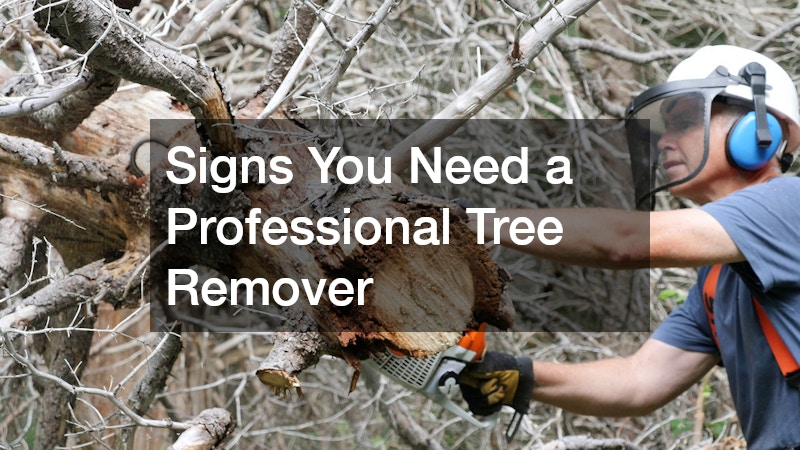

Understanding when it’s necessary to call professional tree removers can prevent potential safety hazards and damage to your property. In this article, we’ll explore the distinct signs that indicate it’s time to get professional help.
How Do You Know If a Tree Is Dangerous?
Visible Signs of Damage and Decay
Trees may become dangerous if they exhibit visible signs of damage, such as cracks, splits in the trunk, or significant decay. These weaknesses can compromise the tree’s stability, making professional assessment essential.
Decay can lead to hollow sections in the tree, which severely weakens its structure. Over time, this decay can spread and cause significant parts of the tree to become unstable, posing risks to the surrounding area.
Additionally, visible fungus growth such as mushroom-like protrusions on the trunk or bark is a sure sign of interior decay. This issue requires the attention of a skilled arborist to evaluate the tree’s health and potential hazards.
Leaning Trees and Root Issues
A tree that is leaning significantly, especially after a storm, can indicate root damage or instability. Root issues are not always visible, and professional evaluation can help determine the safe course of action.
Leaning can also occur slowly over time due to soil erosion or improper anchoring of the roots. Assessing these factors early is crucial, as an unstable root system can cause a tree to uproot unexpectedly.
Tree roots play a vital role in anchoring the tree and accessing necessary nutrients. If roots are disrupted or diseased, it affects the whole tree’s health and increases the risk of falling.
What Are the Risks of Not Removing a Tree?
Property Damage from Falling Trees and Limbs
Neglecting a hazardous tree can lead to it falling or dropping large limbs, causing significant damage to nearby structures, vehicles, or power lines. This can result in costly repairs and potential hazards to infrastructure.
The risk of property damage is heightened during storms or high winds when weakened trees are more prone to collapse. Such events can lead to emergency situations requiring immediate professional assistance.
In areas with frequent severe weather, having potentially dangerous trees assessed regularly is important to prevent unanticipated property damage. A proactive approach helps ensure that significant threats are managed timely.
Personal Safety Hazards
A weak or diseased tree poses serious risks to personal safety. Falling branches can be hazardous to anyone in the vicinity, emphasizing the need for professional removal.
Children playing in yards with hazardous trees may be at risk if limbs suddenly give way. Ensuring the safety of family members and visitors underscores the importance of addressing tree hazards promptly.
Public spaces with high foot traffic need regular tree assessments to prevent injuries from falling debris. Safety in both private gardens and communal areas should be a priority when dealing with potentially dangerous trees.
When Is It Time to Call a Professional Tree Remover?
Signs of Disease and Pest Infestation
If a tree shows signs of disease such as fungus, pest infestations, or unusual leaf discoloration, it may be time to call an expert to assess and remove the tree safely. Diseased trees often become breeding grounds for pests that can spread to other plants.
Insects such as bark beetles or destructive pests can accelerate a tree’s decline. Addressing these issues quickly with professional services can prevent further damage to your landscape.
Besides visual symptoms, internal tree health issues might not be obvious without an inspection. Professional arborists have the tools and expertise to detect and treat infections, potentially saving the tree or minimizing danger.
Interference with Structures or Power Lines
Trees that are growing too close to buildings or power lines should be evaluated by professionals to prevent potential interference and hazards. Overhanging limbs can cause damage to roofs, and roots might affect the foundation of nearby structures.
Similarly, trees in proximity to power lines are serious risks during storms and high winds. Potential power outages, fires, and safety issues are valid concerns needing timely expert intervention.
Professionals not only assess risk but can also safely trim or remove problematic branches and trees. This preventive action ensures that existing structures and essential infrastructure remain unharmed and operational.
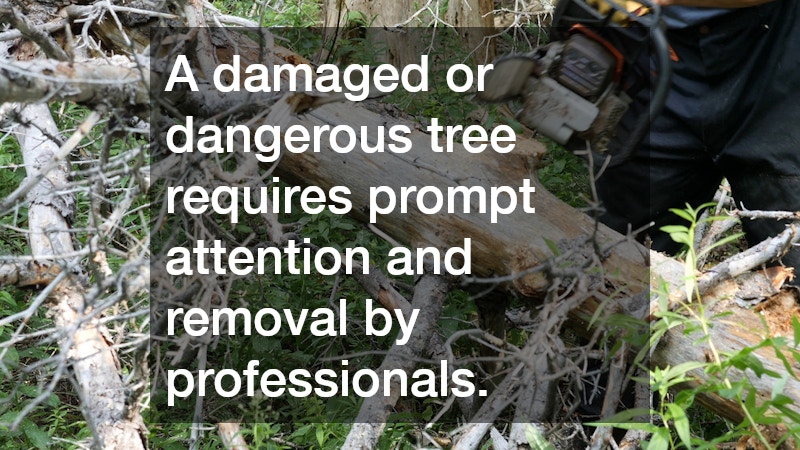
While a thriving tree can enhance the beauty of your property, a damaged or dangerous tree requires prompt attention and removal by professionals. Identifying the signs early and taking action can prevent accidents and maintain the safety of your surroundings.