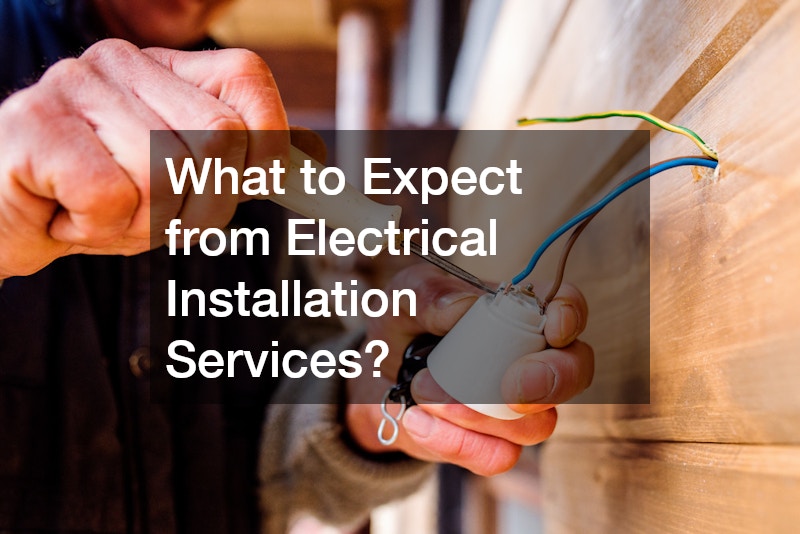

Professional electrical installation services provide structured solutions to safely design, place, and maintain power infrastructure in home and commercial environments. Electrical projects involve high-voltage wiring, delicate panel connections, and precise load balancing that require advanced technical training. Licensed electricians handle every stage of the process, from mapping out circuit pathways to anchoring junction boxes and verifying ground connections. By hiring trained technicians, property owners ensure their electrical infrastructure easily supports modern energy demands while meeting municipal safety mandates.
Properly executing these upgrades prevents localized grid failures and keeps building systems operating smoothly.
How does a typical electrical installation project begin?
A typical installation project starts with an in-depth safety audit and architectural assessment of your existing electrical infrastructure. Electricians evaluate panel capacity, inspect grounding connections, and verify that incoming line voltages match your property’s power demands. They review building floor plans to identify optimal routing for heavy-duty conduits and branch circuits. This detailed upfront assessment helps professionals flag potential hazards—such as outdated knob-and-tube wiring, damaged insulation, or corroded breaker terminals—before active construction begins. Taking these proactive diagnostic steps saves property owners time, reduces project delays, and prevents unexpected repair costs during later installation phases.
What specific steps occur during the primary installation phase?
During the primary installation phase, licensed technicians execute the core mechanical and structural electrical work across the property. They run insulated copper or aluminum conductors through wall frames, install protective conduit networks, and secure heavy-duty junction boxes to hold devices. Certified professionals systematically complete several core tasks:
-
Mounting main service panels, subpanels, and dedicated circuit breakers tailored to specific electrical loads.
-
Routing branch wiring through floors, ceilings, and walls while maintaining required safety clearances.
-
Installing specialized wall receptacles, light switches, and ground-fault circuit interrupter (GFCI) outlets near water sources.
-
Connecting heavy appliances—including HVAC compressors, water heaters, and EV charging stations—to dedicated high-voltage lines.
Why are local building codes and safety standards so critical?
Local building codes ensure that all residential and commercial electrical work meets rigorous structural and operational safety standards. Standardized guidelines protect property owners against dangerous electrical shocks, arc faults, and structural fire risks. Professional electricians closely follow the standards outlined in the National Electrical Code (NEC), which governs minimum safety standards for conductor sizing, conduit placement, and outlet distribution. Furthermore, job sites must strictly maintain compliance with federal guidelines defined by the Occupational Safety and Health Administration (OSHA) to protect workers from arc flash hazards. Following these overlapping rules guarantees that your project passes municipal building inspections smoothly.
How do electricians test and verify the system after installation?
Electricians test and verify system integrity using calibrated diagnostic tools to measure voltage levels, circuit continuity, and proper ground resistance. They run full load tests on individual branch circuits to confirm that circuit breakers trip correctly during overcurrent events. Technicians also install advanced arc-fault protection to detect dangerous spark conditions before they pose a fire hazard. This rigorous verification process confirms that all newly installed wiring operates safely under high daily electrical demands. Completing these exhaustive physical checks gives building occupants confidence that their power infrastructure is completely secure.
What ongoing benefits do professional electrical installation services offer?
Professional electrical installation services deliver long-term operational efficiency, energy cost savings, and peace of mind for property owners. Certified technicians build electrical systems that accommodate future power expansion, such as solar panel integration or smart home automation. Choosing licensed experts for your installation projects yields several long-term advantages:
-
Reduced risk of electrical fires caused by improperly sized conductors or loose terminal connections.
-
Enhanced energy efficiency, which helps lower monthly utility bills across high-use circuits.
-
Seamless compliance with real estate property disclosure rules during future home sales.
-
Extended lifespan for sensitive electronic devices and major household appliances.
How should property owners prepare for an upcoming electrical service visit?
Property owners should prepare for an electrical service visit by clearing physical access pathways to main breaker panels, attic spaces, and crawlspaces. Technicians need unobstructed space to move heavy equipment, run wire pulls, and set up safety barriers near open junction boxes. Clear away stored boxes, furniture, or outdoor debris around service areas to keep your contractors safe and minimize setup delays. Disconnecting delicate electronics ahead of time also prevents unexpected power surge damage during temporary power shutoffs. Communicating clearly with your service team before work begins ensures a fast, efficient, and hassle-free installation process.
Taking time to understand what happens during a professional electrical installation helps you make smart decisions about your property’s power infrastructure. From initial panel assessments to thorough post-installation safety tests, certified electricians handle every step with precision and technical care. According to technical installation benchmarks published by the National Electrical Contractors Association (NECA), relying on credentialed professionals guarantees that your electrical system complies with modern building codes and operates safely for years to come. Investing in skilled workmanship today protects your home or business for decades.