

Transforming a basic backyard into a personal resort is an exciting dream for many homeowners. Imagine stepping out of your back door into a private oasis designed for relaxation, exercise, and weekend family gatherings. A well-planned outdoor space can change how you live, encouraging you to spend more time outdoors, breathing fresh air, and soaking up the sun. It becomes an extension of your living room, a place where memories are made over summer barbecues and evening swims. Property owners often find that investing in their land completely rejuvenates their connection to their home environment, breathing fresh energy into their daily routines. Designing an outdoor space is truly an investment in your personal peace.
However, combining a major water feature with intricate outdoor living spaces involves hidden complexities that require careful, advanced coordination. This is not a simple weekend project that you can figure out as you go. It is a major construction endeavor that changes the shape, drainage, and utility infrastructure of your property. If you do not plan carefully, you could end up with a yard that floods when it rains, cracked patios, or a layout that feels cramped and awkward. This comprehensive guide provides a step-by-step roadmap from initial property evaluation to the final touches of a complete backyard overhaul, ensuring your project runs smoothly from start to finish.
Step 1: Mapping Property Boundaries and Assessing Your Soil

Before you buy a single outdoor chair or look at stone samples, you must understand the invisible rules and boundaries of your land. Every piece of residential property is governed by local zoning laws, building codes, and utility easements. Easements are sections of your yard that public utility companies have a legal right to access for gas, water, power, or sewer lines. Building a permanent structure on top of an easement is strictly forbidden and can result in the city tearing down your expensive new work.
To avoid these catastrophic legal and financial mistakes, you need to bring in professionals to analyze the physical space before drawing any plans.
- Locating Underground Utilities: You must call your local diggers’ hotline before any shovel touches the dirt. They will mark underground electric cables, gas lines, and fiber optic wires with colored paint so workers can avoid dangerous accidents.
- Checking Zoning Setbacks: Most towns have strict rules about how close a structure can be to the property line. For example, you might be required to leave a ten-foot buffer zone between your new features and your neighbor’s fence.
- Evaluating the Grade: You need to look closely at how your yard slopes. Water always flows downhill, and altering the shape of your yard can accidentally send a river of mud toward your house or your neighbor’s basement during a heavy storm.
Planning a massive outdoor remodel requires an accurate mathematical blueprint of your starting point. Before sketching any ideas, a professional crew must complete a site plan survey to verify legal property lines and easement zones. Having this accurate blueprint prevents errors when you begin mapping out the actual layout of your landscape design. It gives you a clear look at what is possible on your specific piece of land, allowing you to design a functional flow for walkways, garden beds, and lounge areas without crossing legal boundaries.
Step 2: Preparing the Soil and Clearing Out Wild Vegetation
Once you have a legal and accurate blueprint of your yard, the physical transformation can begin. If your backyard is like most, it probably contains a mix of old trees, overgrown bushes, patchy grass, and hidden underground rocks. To build long-lasting structures like stone walls or decks, you need to clear away this organic material and prepare a completely blank canvas. Leaving old tree stumps or rotting roots in the ground is a recipe for disaster, because as that wood rots over the years, the soil above it will cave in and cause your expensive patios to sag.
Preparing the earth correctly requires heavy machinery and a clear plan for what stays and what goes.
- Removing Tree Obstacles: While mature trees add beauty and shade, any tree sitting directly where construction will happen must be completely chopped down, and its root ball yanked out of the earth.
- Protecting Chosen Plant Life: If there are healthy trees or bushes you want to keep, wrap their trunks in protective wooden slats to prevent heavy tractors from scarring the bark during the construction phase.
- Managing Topsoil: The dark, nutrient-rich dirt on the surface is great for future plants. Have the workers scrape this top layer off and pile it in a corner so you can reuse it later for flower beds instead of buying expensive bags of soil.
This phase of the job can be incredibly messy and loud, changing your yard into a muddy field in a matter of hours. The first physical step on the property always involves heavy land clearing to remove unwanted rocks and overgrown weeds. Completing this thorough lot clearing gives the construction crew a clean, flat surface to safely operate heavy machinery. It ensures that when specialized builders arrive to start digging the deep sections of your yard, they will not run into unexpected buried logs or hidden trash dumps that throw off the entire construction timeline.
Step 3: Moving Earth and Shaping the Deep Water Zone
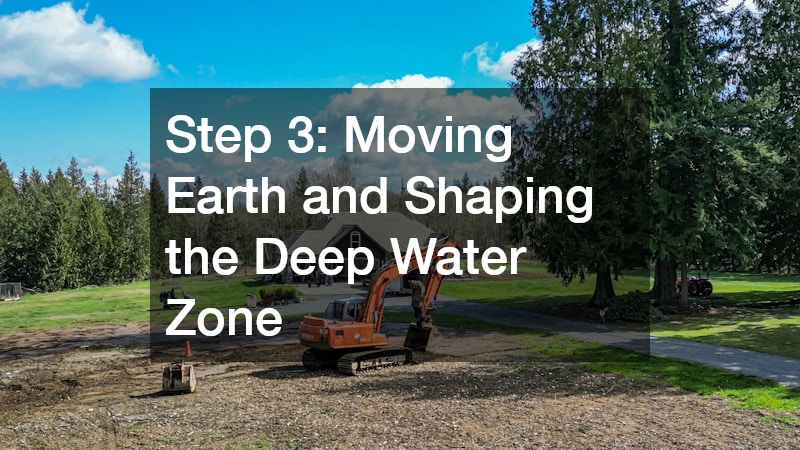
Now that your yard is an open, clean field of dirt, it is time for the most dramatic phase of the project: changing the actual shape of the earth. This is the stage where your backyard starts to look like a real commercial construction zone. Large backhoes, skid steers, and dump trucks will move in to shift tons of heavy dirt. Watching these machines work is fascinating, but it highlights why you cannot treat this like a casual DIY project. Moving this much dirt changes how weight is distributed across your entire property.
Shaping a deep pit in the ground requires precise structural engineering so the surrounding dirt does not collapse or shift under pressure.
- Guiding the Dig: Workers use laser levels and wooden stakes to guide the machine operators, ensuring the hole is dug to the exact depth and width specified in the structural plans.
- Stonework Foundations: The edges of the deep hole must be carefully sloped and packed tightly to prevent the surrounding soil from sliding back into the pit during a sudden summer rainstorm.
- Plumbing and Steel Lines: Before any concrete is brought in, workers line the open pit with a dense grid of steel rebar and thick PVC plumbing pipes to handle water circulation and filtration.
The process of excavating the deep end requires precision so the surrounding soil walls do not collapse during a rainstorm. This deep digging must be perfectly calculated down to the inch, as any mistake can result in uneven water levels or weak structural walls. Once the hole is perfectly shaped, workers pour thick concrete to create the permanent shell of your swimming pool. This solid concrete structure forms the anchor for your entire backyard, acting as the centerpiece that all your other walkways and patios will connect to.
Step 4: Building Solid Walkways and Selecting Durable Surfaces
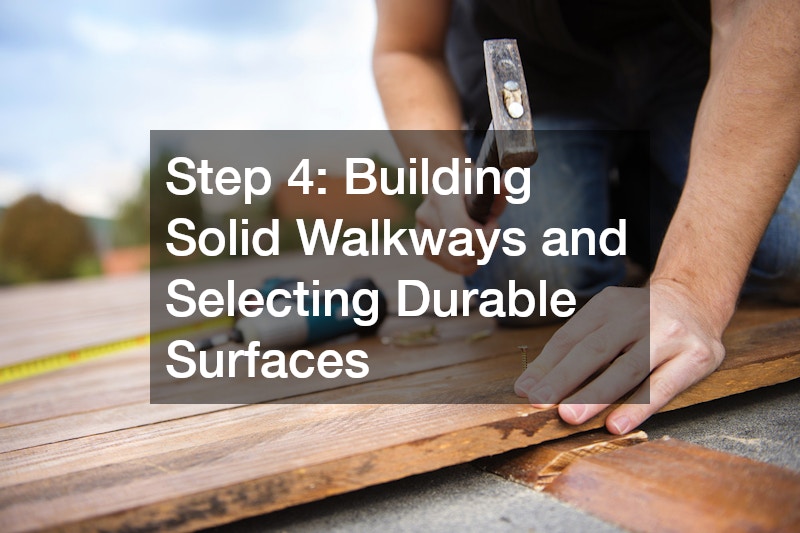
With the heavy water feature securely anchored in the ground, the focus shifts to creating comfortable, durable spaces where people can walk, lounge, and dry off. The ground surrounding a water feature takes a lot of abuse. It gets soaked with chemically treated water, baked by the hot summer sun, and walked on by bare feet. If you pick the wrong materials, you could end up with a surface that gets so hot it burns your skin, or a slippery stone that causes people to fall when they step out of the water.
Building these flat surfaces requires creating a complex, multi-layered foundation hidden beneath the stones.
- Spreading the Gravel Base: Workers lay down a deep layer of crushed gravel and use heavy vibrating machines to pack it down until it is as solid as a highway. This stops the ground from shifting when the soil freezes in the winter.
- Adding the Bedding Sand: A smooth layer of sharp sand goes over the gravel, allowing workers to level the top stones perfectly so there are no tripping hazards.
- Securing the Edges: Heavy plastic or concrete borders are pinned along the edges of the walkways to lock the individual pieces together and stop them from spreading apart over time.
Selecting the right professional to lay these stone layers is critical for the long-term beauty of your yard. A skilled hardscaping contractor will ensure that your patios are sloped slightly away from the house to prevent water damage. They will guide you toward materials that can handle constant moisture and foot traffic. Interlocking stone pavers are an excellent choice because they can expand and contract slightly without breaking apart. These stones come in a wide variety of colors and textures, allowing you to create custom patterns that frame your water feature beautifully.
Moreover, it’s also essential to consider the overall layout and flow of your outdoor space, ensuring that it complements your landscape design. Investing in quality installation will not only enhance the visual appeal but also increase the value of your property for years to come.
Step 5: Hiring Professionals for Large-Scale Stonework and Driveways

As your backyard transformation nears completion, you will need to manage the final large-scale construction details. Bringing in tons of stone, concrete, and sand requires serious logistics. Heavy delivery trucks can easily crush standard neighborhood sidewalks, tear up front lawns, or crack existing driveways if they are driven over the wrong areas. Managing these deliveries and ensuring the crews work safely requires open communication and clear agreements before any contracts are signed.
When vetting companies for this final phase, look for signs of true professional expertise and local business experience.
- Checking Insurance Coverage: Make sure any business you hire carries comprehensive general liability insurance and workers’ compensation to protect you from lawsuits if an accident happens on your land.
- Verifying Local Licenses: Reputable businesses should easily provide their local tax identification numbers and city operating licenses to prove they follow local regulations.
- Reviewing Past Work: Ask to see real portfolios of projects they completed three or four years ago so you can see how well their stone choices hold up against weathering and time.
Choosing an experienced team prevents minor mistakes from ruining the rest of your home’s exterior features. Working with a licensed paving contractor ensures that the heavy machinery will not crack your existing neighborhood sidewalks. They will know exactly how to distribute the weight of their equipment and protect your driveway from oil stains and scratches. A reputable paving company will use a heavy vibrating roller to pack down the subgrade before pouring any finished surfaces. This extra care ensures your new paths stay flat, beautiful, and safe for decades of summer fun.
Moreover, an experienced contractor will also advise you on the best materials that suit your climate and usage, enhancing the durability of your surfaces. They have the expertise to foresee potential issues that can arise, leading to timely solutions. Regular maintenance tips will be provided, ensuring that your new installation remains in peak condition long after the job is completed. Taking these final steps seriously guarantees a flawless transition between your home and your new landscape. Careful management ensures that your existing landscaping is left beautifully intact, allowing your home to maintain its charm and appeal for years to come.
Conclusion
Planning a complete backyard transformation is a major journey that requires patience, investment, and clear communication. By taking the time to map out your boundaries, clear away old obstacles, and invest in deep structural engineering, you can avoid the costly mistakes that ruin many home improvement projects. Each phase of the construction build relies heavily on the step that came before it, proving that a beautiful yard is built from the underground up. When you take a careful, organized approach to your outdoor remodeling goals, you ensure that the final result is a structurally sound oasis that enhances your daily lifestyle. You can look forward to a relaxing future in a stunning outdoor environment that adds immense equity and joy to your family home.