
In the world of construction and landscaping, paving companies play a vital role in creating durable and aesthetically pleasing surfaces. Whether it’s for a residential driveway, a commercial parking lot, or a public road, paving companies provide the expertise and equipment necessary to lay down a roadway that is not only functional but also visually appealing. Understanding how these companies operate can help property owners make informed decisions when selecting a service provider for their paving needs.
The Initial Consultation and Planning
When it comes to paving, the first step typically involves an initial consultation with the paving company. During this phase, homeowners or business owners discuss their specific needs, budget, and preferences with the company. The paving company’s representative will assess the site, taking note of factors such as terrain, drainage, and existing structures. By meticulously planning the project, the company can ensure that the finished surface meets the client’s expectations while adhering to regulatory standards. This initial planning stage helps set the foundation for a successful paving project, with clear communication on project timelines and costs.
Once the client and the paving company are aligned on the project goals and specifications, a detailed proposal is usually prepared. This document outlines the scope of work, including materials, costs, and schedules. Transparency at this stage is important, as it prevents misunderstandings and helps build trust. Many paving companies offer flexible payment options and warranties on their work, providing added assurance for clients. With a clear plan in place, the paving project can proceed to the next steps, ensuring that timelines are met without compromising on quality.
The Importance of Site Preparation
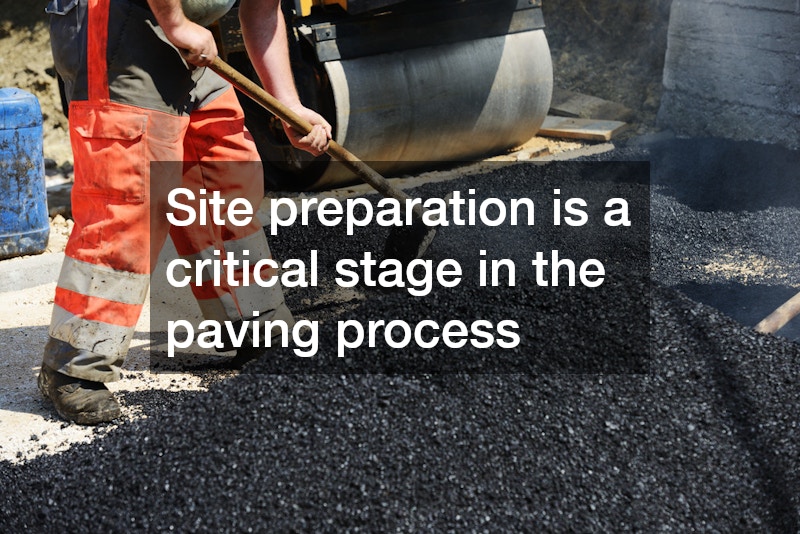
Site preparation is a critical stage in the paving process, and it greatly influences the longevity and performance of the finished surface. Paving companies generally start by clearing the site of debris and old materials, creating a clean slate for the new installation. This may involve removing old asphalt, rocks, or vegetation that could undermine the new surface. Proper leveling and compacting are essential steps in the preparation phase, helping to ensure the base is stable and ready for the new pavement. A well-prepared site reduces the risk of future issues such as cracks or uneven settling.
Paving companies also pay close attention to soil conditions during site preparation. The type and condition of the soil can affect how well it supports the pavement, making it necessary to conduct soil tests and possibly amend the soil composition. Stabilizing agents or geotextiles may be used in certain areas to enhance soil strength and prevent erosion. By addressing these concerns, paving companies can create a stable and durable foundation that meets the demands of the project. Attention to detail in site preparation helps ensure that the pavement not only looks good but also performs well under various conditions.
The Paving Process
Once the site is properly prepared, paving companies move on to the application of the chosen materials. The process begins with the application of a base layer, which provides additional support and stability for the surface. This is typically a gravel or crushed stone layer, compacted rigorously to ensure evenness and strength. The selected paving material, such as asphalt or concrete, is then laid over this base layer. Experienced paving crews use specialized equipment to ensure the material is applied smoothly and uniformly. This part of the process requires precision and expertise to achieve a flawless finish.
Concrete paving is another popular option, known for its strength and long-term durability. Paving companies often recommend concrete for areas that require a highly durable surface, such as industrial zones or large commercial projects. The process involves pouring ready-mix concrete into formwork, followed by a curing period to allow the concrete to set and harden. Proper curing is crucial, as it affects the ultimate strength and lifespan of the concrete surface. Regardless of the material used, the key to successful paving lies in the precision of the application, ensuring a surface that performs well for years to come.
Finishing Touches and Maintenance
Once paving is complete, companies focus on the finishing touches that enhance the functionality and appearance of the surface. This often includes sealing the surface to protect against the elements, providing a layer of protection against water, oil, and UV rays. Sealcoating is a common practice that acts as a barrier, reducing the likelihood of surface degradation over time. Markings or painted lines are applied to regulate traffic and enhance safety, especially in parking lots or roadways. Attention to detail during this stage ensures that the paved surface not only looks professional but also meets safety standards.
Paving companies bring a wealth of knowledge and expertise to every project, ensuring that each paved surface is crafted to withstand the test of time. From the initial consultation through to the finishing touches, these companies coordinate meticulous processes to deliver high-quality results. By understanding how paving companies work, property owners can make informed decisions that meet their specific needs, ensuring a smooth, durable, and visually appealing surface. Careful planning, site preparation, skilled application, and maintenance are the cornerstones of successful paving projects, making paving companies an essential partner in any paving endeavor.